Chasing Waves Minimalist Ocean Line Art: Graphics & T-Shirt Designs
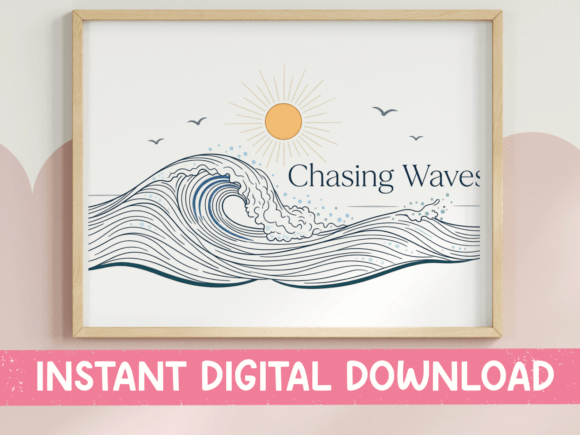
This design captures the quiet pull of the coast—not with photorealism or clutter, but with restrained confidence. A single ocean wave rendered in deep navy and slate blue, built from fine parallel lines that suggest motion, rhythm, and breath. It doesn’t shout. It invites. That’s the first impression: calm, intentional, and unmistakably coastal—yet stripped of cliché.
For digital product creators building a cohesive shop—whether on Etsy, Creative Fabrica, or Shopify—Chasing Waves Minimalist Ocean Line Art lands squarely in the “elegant minimal” niche. It leans modern and serene rather than playful or rustic. Think small business branding for wellness studios, boutique surf shops, mindful lifestyle blogs, or coastal-themed subscription boxes—not beach party decor or cartoonish summer kits. Its visual personality supports perceived value: clean, thoughtful, and quietly premium.
In real selling scenarios, this graphic design asset flexes across formats without losing clarity. As an SVG design, it cuts cleanly on Cricut and Silhouette machines—ideal for vinyl decals on tumblers, tote bags, or nursery wall art. As a high-res PNG design with transparent background, it drops seamlessly into Canva templates for greeting cards, planner stickers, or social media graphics. Its line weight holds up well in sublimation design applications on mugs and apparel, especially when paired with soft neutral palettes. And as a t-shirt design? It reads clearly at chest or back placement—even on lightweight fabric—without needing heavy outlines or shadows.
Where Chasing Waves Minimalist Ocean Line Art strengthens product presentation is in visual storytelling and consistency. Use it across a seasonal bundle—say, a “Coastal Calm” digital download set including printable wall art, matching journal covers, and Instagram story templates—and customers instantly grasp the theme. On Etsy product mockups, it anchors thumbnails with strong visual hierarchy: simple shape, clear contrast, no competing elements. That improves click-through potential, especially next to busier, more saturated listings. For small business branding, it adds cohesion to packaging design or email headers without overwhelming the message.
It performs best where space and subtlety matter: large-format printable wall art (16x20 or larger), minimalist tumbler wraps, delicate mug designs, understated nursery prints, and clean Canva template backgrounds. It also works well in themed bundles—paired with soft sand textures, linen paper scans, or muted seafoam accents—to build a full creative marketplace listing that feels curated, not assembled.
That said, use caution in contexts where detail gets lost. Tiny sticker designs under 1 inch may blur its fine parallel lines; test print at actual size before finalizing. Avoid placing it directly over busy patterns or low-contrast dark backgrounds unless you’ve verified legibility—its navy-on-slate palette assumes some tonal separation. In text-heavy templates (like event invitations or workshop handouts), give it breathing room—don’t crowd it with dense body copy. And if you’re using it for Cricut projects requiring precise cut lines, inspect the SVG paths: check for stray anchor points or overlapping strokes that could cause cutting errors.
Before publishing any listing, run these practical seller checks: preview Chasing Waves Minimalist Ocean Line Art on both white and charcoal mockups; test how it renders in your chosen print-on-demand platform’s color preview tool; verify PNG transparency by dropping it onto a colored layer in Canva or Photoshop; and open the SVG in Design Space to confirm smooth, single-layer cut paths. Organize files clearly for buyers—label versions as “SVG_Cricut,” “PNG_300dpi,” “Sublimation_HighRes”—and include a brief usage guide in your digital download folder.
Typography pairing matters too. This illustration pairs naturally with serif fonts for editorial elegance (think Playfair Display or Cormorant Garamond), clean sans serifs for modern balance (Inter or Montserrat), and light script fonts for subtle handmade warmth—avoid heavy display or decorative fonts that compete with its quiet rhythm. Handwritten fonts can work, but only if they echo the same lightness and flow.
Licensing is non-negotiable. Confirm the commercial license explicitly permits finished product sales—not just digital resale. If you’re bundling it into a Canva template or digital paper pack, ensure redistribution rights are included. Never assume “personal use only” assets are safe for POD or physical goods. When in doubt, contact the original creator or source directly.
For Etsy sellers launching a new t-shirt collection, try Chasing Waves Minimalist Ocean Line Art as a limited “Anchor Piece”: one core design featured across three products (a relaxed-fit tee, a ceramic mug, and a 8x10 framed printable). Run it alongside two complementary—but distinct—designs to test which resonates most with your audience. Track add-to-cart rates, not just clicks. You’ll learn faster whether this aesthetic converts for your buyers—or if it needs slight adaptation (like adding a tiny anchor icon or adjusting line density).
It’s not a viral-ready, trend-chasing graphic. It’s a steady, versatile, commercially sound design asset—built for longevity, not novelty. That makes it especially valuable for creative entrepreneurs building a recognizable brand identity over time, not just chasing quarterly trends. Whether you're a solo designer selling SVGs on Creative Market, a craft business scaling with print-on-demand, or a content creator licensing blog graphics, Chasing Waves Minimalist Ocean Line Art functions as quiet infrastructure: professional, adaptable, and ready to support real revenue—not just pretty pixels.
Bottom line: if your audience values intention over intensity, calm over chaos, and quality execution over quantity, this graphic design asset earns its place in your digital product toolkit. Just test it like a pro—not as decoration, but as a working part of your product pipeline.