Marmot SVG & Clipart for Crafts and Graphics
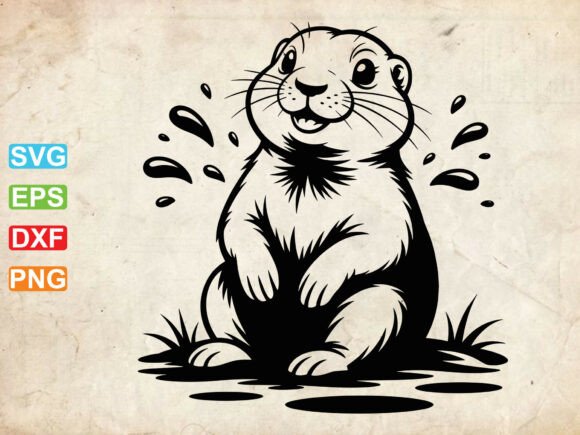
As a graphic designer who’s built brand identities for outdoor boutiques, seasonal Etsy shops, and regional craft fairs over the past 12 years, I recently evaluated Marmot Svg, Marmot Clipart, Marmot Shirt for a real client project: a limited-edition spring collection for a handmade apothecary brand launching “Mountain Meadow” herbal teas and reusable linen totes. The goal was cohesive, earthy-yet-polished visuals—no stock clichés, no overused wildlife tropes. What stood out immediately about this asset wasn’t just its subject, but its execution: clean vector linework, intentional negative space, and a silhouette style that feels both illustrative and scalable.
A Mood That Grounds, Not Distracts
Marmot Svg, Marmot Clipart, Marmot Silhouette, Marmot Vector Art delivers quiet confidence—not cartoonish, not clinical. It leans into naturalism without sacrificing clarity, making it ideal for brands rooted in authenticity: local hiking co-ops, sustainable apparel lines, forest therapy workshops, or small-batch candle makers. In our apothecary project, it anchored the visual language—pairing seamlessly with hand-drawn botanical line art and warm, uncoated paper textures. It didn’t shout; it settled in like familiar terrain.
Where This Graphic Design Asset Earns Its Place
In practice, Marmot Svg, Marmot Clipart, Marmot Shirt excels where warmth and subtle storytelling matter most:
- Product mockups—especially for tote bags, ceramic mugs, and kraft-label tea tins. Its silhouette reads clearly at 2–3 inches wide on physical goods.
- Packaging design—as a repeating border element, corner accent, or central motif on sticker seals and box stamps.
- Social media graphics—scaled as a hero element in Instagram carousels or Pinterest pins for seasonal campaigns (“Wild Spring Launch” or “Alpine Wellness Week”).
- Cricut projects and printable designs—it cuts cleanly on vinyl and cardstock, with no fragile interior details prone to tearing.
- Brand identity systems—not as a primary logo (too specific), but as a supporting icon within a larger visual vocabulary: think pattern swatches, website dividers, or email footer motifs.
- Editorial and web design—as decorative anchors in blog headers or section breaks for nature-focused newsletters and small business websites.
Real-World Limitations Every Designer Should Note
This isn’t a universal solution—and that’s part of its strength. Marmot Svg, Marmot Clipart, Marmot Shirt should be used carefully in contexts demanding extreme minimalism or technical precision:
- Small sizes under 0.5 inches: fine leg detail blurs; best reserved for mid-to-large applications.
- Crowded layouts: avoid pairing it with dense typography or busy patterns—it loses breathing room.
- Corporate or tech branding: its organic tone clashes with sleek, data-driven visual systems.
- Low-contrast backgrounds: test rigorously on light grays or soft beiges—some versions lack sufficient edge definition.
How It Shapes Perception—and Why That Matters
Used well, this graphic design asset strengthens visual trust. Its consistent proportions, balanced weight distribution, and intentional simplification signal intentionality—not clipart-as-afterthought. For a small business branding project, that translates directly to perceived professionalism. Clients notice when an illustration feels chosen, not dropped in. In our apothecary rollout, the marmot motif appeared across digital ads, product tags, and printed invitation suites—each time reinforcing a cohesive, grounded mood without repetition fatigue.
Designer Notes You Can’t Skip Before Client Use
Before dropping Marmot Svg, Marmot Clipart, Marmot Shirt into a live file, run these checks:
- Test in black and white: confirm readability without color reliance—critical for embroidery, foil stamping, or monochrome print runs.
- Preview on light/dark backgrounds: verify PNG transparency works cleanly and SVG paths render without stray nodes.
- Scale it down to 16px and up to 24”: assess how stroke weight holds up—this determines suitability for favicon use vs. wall art.
- Drop it onto real mockups: see how it interacts with fabric texture, matte paper grain, or ceramic glaze before finalizing.
- Confirm commercial license scope: check if sublimation, POD platforms (like Printful or Redbubble), and resale in Canva templates are explicitly permitted.
- Pair with fonts deliberately: it harmonizes with sturdy sans serifs (e.g., Montserrat Bold), gentle serifs (Cormorant Garamond), and restrained display fonts—but competes with ornate scripts or ultra-thin type.
Final Verdict: A Thoughtful Addition to Your Creative Marketplace Toolkit
Marmot Svg, Marmot Clipart, Marmot Shirt isn’t flashy—but then again, neither is thoughtful branding. It’s a reliable, mood-forward creative design asset that supports handmade business narratives without overwhelming them. For designers building seasonal collections, crafting packaging for indie makers, or developing social media graphics for eco-conscious brands, it’s a quietly effective tool. As long as you treat it like what it is—a considered illustration, not generic clipart—you’ll find it earns its place in real client work: not as decoration, but as visual punctuation with purpose.