Pug Dog Portrait Art
First Impression: Sweet, Simple, and Stitch-Ready
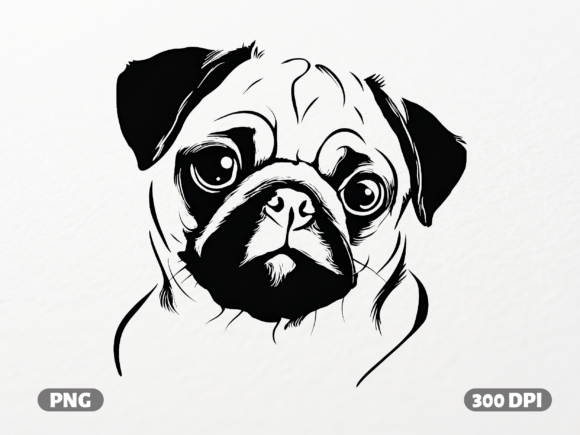
When I opened Pug Dog Portrait Art, I didn’t see just another black-and-white line drawing—I saw a quiet confidence in its minimalism. The sweet, slightly lopsided pug face is instantly recognizable: those deep-set eyes, the soft folds around the muzzle, the gentle curve of the jowls. It’s not overly detailed or fussy—no shading, no gradients, no background clutter. That’s a win. For embroidery designers, simplicity like this isn’t lazy; it’s intentional. It means fewer stitch jumps, cleaner satin edges, and far less risk of thread nesting or fabric puckering on real-world projects.
A Real Project Test: Embroidering a Linen Tote for a Local Pet Boutique
Last week, I used Pug Dog Portrait Art to embroider a medium-sized tote for a small-batch pet boutique launching a “Pug Love” summer collection. We chose natural linen—a textured, breathable fabric that’s beautiful but unforgiving if a design lacks clean lines or balanced weight. The portrait held up beautifully: the outline stayed crisp at 3.5" wide, the wrinkles read as expressive rather than messy, and the negative space around the face gave the stitching room to breathe. Customers loved how handmade it felt—not stiff or digitized, but warm and characterful. That’s the kind of reaction you want when your embroidery carries your brand voice.
Where This Design Shines (and Where It Asks for Thought)
Pug Dog Portrait Art fits naturally into several high-value categories—but not all equally. It’s ideal for:
- Custom apparel: Works especially well on sweatshirt cuffs, t-shirt chest placements, and baby onesies where charm and clarity matter more than fine detail.
- Embroidered patches: Its strong silhouette and open interior make it perfect for sew-on or iron-on patches—no dense fill stitches to stiffen the fabric.
- Nursery decor & baby embroidery: Gentle, non-distracting, and full of personality—ideal for pillow covers, tea towels, or burp cloths where softness and readability are priorities.
- Holiday and personalized gifts: Think embroidered dog-themed Christmas stockings or anniversary totes for pug-owning couples—it adds warmth without overwhelming.
That said, it’s not magic on every surface. Use caution with:
- Curved surfaces like caps: The face’s symmetry relies on flat tension—if hooping isn’t precise, the nose or eyes can distort subtly.
- Thin or stretchy fabrics: Without internal structure (like satin-stitched eyes or dense fill), very light knits may need extra stabilizer to keep lines from wavering.
- Dark fabric backgrounds: Since it’s black-and-white line art, contrast depends entirely on your thread choice. A charcoal thread on navy won’t pop—test first.
- Small hoop sizes under 4": The subtle wrinkles near the cheeks shrink fast. Below 2.5", they start to blur unless simplified manually.
What It Adds to Your Finished Product—Beyond the Stitch
This isn’t just about whether the design sews cleanly (it does). It’s about what it communicates to your customer. Pug Dog Portrait Art reads as thoughtful—not generic clip art, not overdesigned, not trying too hard. That builds trust. When someone buys an embroidered kitchen towel with this design, they’re not just buying utility—they’re buying affection, nostalgia, and craft intention. For Etsy sellers and small shop owners, that emotional resonance translates directly into perceived value, repeat buyers, and word-of-mouth referrals.
It also supports brand consistency beautifully. Whether you’re using it across tote bags, aprons, and holiday cards, the clean line work ensures cohesion—even if you change thread colors seasonally (navy for fall, sage for spring, blush for baby collections). And because it’s rooted in classic illustration—not trendy filters or AI stylization—it stays relevant across product cycles.
Practical Designer Notes Before You Stitch
Before committing Pug Dog Portrait Art to your next client order or craft fair batch, here’s what I always do:
- Test on scrap fabric—especially if you’re using textured weaves, knits, or blends. Linen, cotton twill, and midweight canvas behave differently than smooth poly-cotton.
- Check thread color contrast in natural light. What looks bold on screen can disappear on dark denim or heather gray.
- Review stitch density. As a line-art graphic, it likely leans on running or satin stitch—confirm there’s no unintended fill stitching hiding in corners or eyes.
- Confirm hoop size compatibility. If you’re planning a 2" version for a cap front, double-check whether the original file scales cleanly—or whether manual cleanup is needed.
- Inspect small details at actual stitch size: Are the nostrils distinct? Does the lower lip read as a shape, not a stray line?
- Mock it up in black and white first—this design lives in tonal contrast, so grayscale previews reveal clarity issues faster than color.
- Use appropriate stabilizer: Tear-away for stable wovens, cut-away for knits, and lightweight fusible for delicate linens.
- Verify licensing before selling finished items or listing digital embroidery files. Since it’s categorized as T-Shirt Designs and Graphics, confirm commercial use rights apply to both physical products and digital resale.
Final Thought: A Quiet Workhorse, Not a Flashy Gimmick
Pug Dog Portrait Art won’t shout across a crowded craft fair—but it’ll draw people in, make them smile, and get purchased twice. It’s the kind of embroidery design that works hardest when it’s not trying to. Whether you’re stitching for joy, clients, or commerce, it delivers consistent charm, reliable performance, and real versatility. Just remember: even the sweetest pug deserves a thoughtful stitch. Test it. Trust your eye. And let the personality shine through—naturally.