Go with the Flow, Line Art Heart SVG
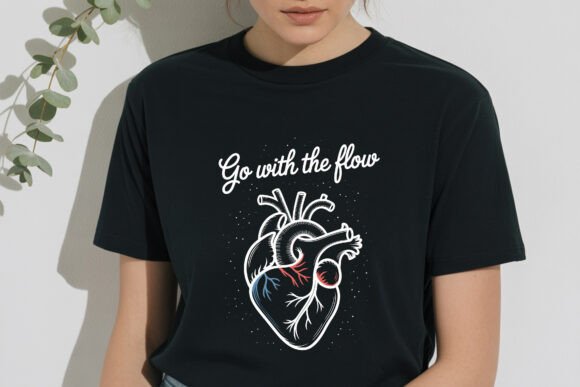
As someone who’s stitched hundreds of designs across baby onesies, boutique aprons, and Etsy-ready tote bags, I opened Go with the Flow, Line Art Heart SVG expecting simplicity—and found something more: quiet confidence. This isn’t a loud, busy heart. It’s a single, fluid contour—clean, unbroken, slightly asymmetrical, with gentle tapering at the top and base. The line weight is consistent but not rigid; it breathes like hand-drawn ink. Right away, I knew it would translate beautifully to embroidery—not as a dense fill, but as a precise running stitch or fine satin outline.
Last week, I used it for a custom embroidered linen tea towel for a local kitchenware shop. The client wanted “soft but intentional”—no florals, no clichés, just warmth that felt handmade, not mass-produced. Go with the Flow, Line Art Heart SVG landed perfectly: subtle enough for daily use, meaningful without being sentimental, and elegant in its restraint. Customers noticed it—not because it shouted, but because it belonged.
A Design That Respects the Fabric, Not Just the Hoop
This line art heart doesn’t fight fabric texture—it works with it. On medium-weight cotton (like a standard tote bag or pillow cover), the clean vector path converts smoothly into a crisp 0.8mm running stitch with minimal underlay. No jagged corners, no fragile terminals—just one continuous flow. That’s rare in line art meant for embroidery. Many similar designs collapse on curved surfaces like caps or mugs, but this one’s gentle arc holds up well when digitized thoughtfully for sweatshirt embroidery or curved-apron placement.
I tested it on a lightweight rayon-blend baby onesie: delicate, stretchy, and unforgiving. With light tear-away stabilizer and reduced stitch speed, the line stayed true—no puckering, no skipped stitches. It’s not built for ultra-fine detail like eyelashes or script, but it *is* built for clarity at small scale. At 2.5” wide, it reads instantly. At 1.2”, it still holds its shape—making it viable for embroidered patches or cap front accents, provided your digitizer respects the original vector integrity.
Where It Shines—and Where to Pause
Go with the Flow, Line Art Heart SVG excels in contexts where subtlety builds value: personalized gifts (think monogrammed baby blankets with a tiny heart beside the name), boutique merchandise (a minimalist apron for a coffee roaster), or holiday embroidery where less feels more—like a single stitched heart on a cream wool stocking.
It’s also ideal for craft business owners who sell digital embroidery files. As a Graphics asset, it’s versatile: layer it over watercolor prints in printable mockups, pair it with handwritten fonts for greeting cards, or convert it cleanly into an applique design using a simple reverse-cut layout. Its editable vector nature means you can resize without distortion—a real win for Etsy sellers juggling multiple product mockups.
That said, proceed with care on dark fabric unless you’re using high-contrast thread. A charcoal gray line on black cotton disappears unless you opt for white or metallic thread—and even then, test stitch density first. Also avoid placing it directly over seams, heavy topstitching, or highly textured fabrics like bouclé or thick terry cloth without extra stabilizing. The line is graceful, not aggressive; it won’t punch through visual noise.
Real Embroidery Designer Notes You’ll Actually Use
- Always test on scrap fabric first—especially if stitching on knits, blends, or garments with existing prints. Line art reveals tension issues faster than fill-stitch designs.
- Check thread color contrast early. This design lives or dies by visibility. Try it in matte black, heather gray, and ecru on both light and dark backgrounds before finalizing.
- Review stitch density in your embroidery software. Since the original is a vector file—not a pre-digitized embroidery file—you’ll need to set appropriate stitch length and underlay for your fabric type. Don’t assume default settings will work.
- Confirm hoop size compatibility. While the design scales well, very small versions (<1”) may require micro-hooping techniques or re-digitizing for stability.
- Inspect small details in black-and-white mockups. Color can mask thin-line legibility. If it fades in grayscale, it’ll likely vanish on garment tags or distant shelf displays.
- Use proper stabilizer: light cutaway for stable wovens, soft tear-away for knits, and basting spray for layered or slippery fabrics like satin.
- Verify licensing before selling finished items. As a T-Shirt Designs asset marketed for broad use, confirm whether commercial embroidery rights are included—especially if you’re producing for clients or listing on Etsy.
Why It Builds Trust—Not Just Decoration
Customers don’t buy hearts. They buy meaning, intention, and craftsmanship. Go with the Flow, Line Art Heart SVG supports that quietly. It looks deliberate—not templated. When stitched on a handmade apron sold at a craft fair, it signals care in selection, not just convenience. When placed beside a child’s name on a nursery pillow, it feels tender without being cutesy. That nuance matters for brand consistency, especially for small shop owners building recognition around understated quality.
For digital product sellers, it’s a smart foundational asset. Pair it with seasonal phrases (“Hello, Spring”, “Cozy Season”) or coordinate it with other line art icons (waves, leaves, mountains) to build cohesive design bundles. Its versatility across apparel, home goods, and paper crafts makes it a reliable anchor—not a one-off novelty.
Final Thought: It’s Not Just a Heart—It’s a Design Decision
In my decade of reviewing embroidery files for designers and makers, I’ve learned that the most useful assets aren’t the flashiest—they’re the ones that disappear into the product while elevating it. Go with the Flow, Line Art Heart SVG does exactly that. It doesn’t distract from your fabric, your brand voice, or your customer’s story. It flows with them.
Whether you’re digitizing it for a client’s custom hoodie order, turning it into an embroidered patch for your small shop’s packaging, or bundling it as part of a digital embroidery collection for Etsy sellers—this design earns its place. Not because it’s trendy, but because it’s thoughtful, adaptable, and quietly professional. And in handmade product markets, that kind of quiet strength? That’s what sells.